


Quick Tech: How to Properly Set up the Idle on Holley Carburetors

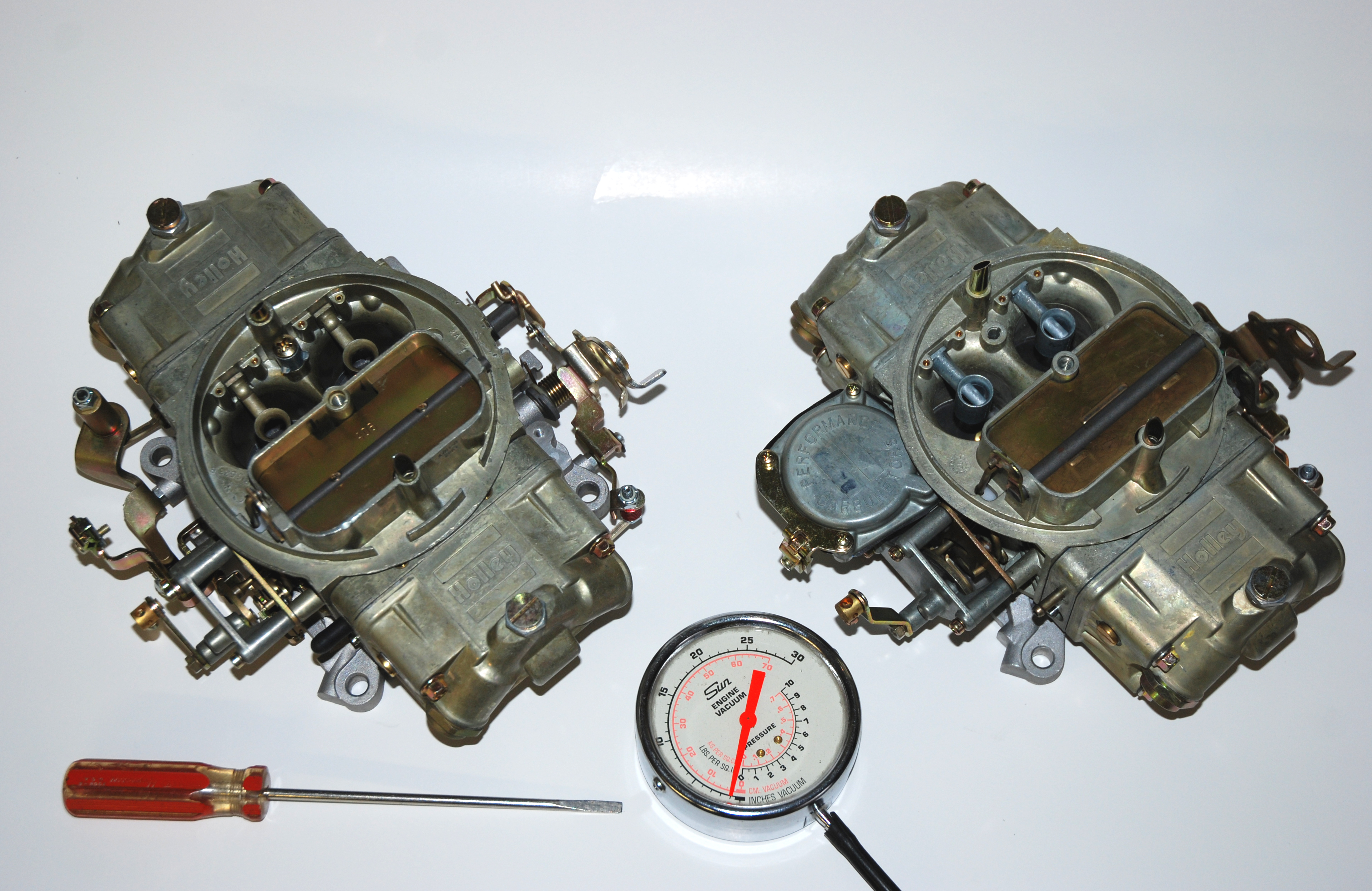
Holley four-barrel carburetors are probably the most common high performance fuel mixing devices on the planet. Given the sheer numbers of carburetors made since the 1950s, you know they work. If there is a fly in the Holley ointment, it’s setting up the idle. Since Holleys are so easy to adjust, it’s also easy to adjust them totally wrong. People will get the idle settings wrong, then blame the carburetor when it doesn’t work properly. That’s a big mistake.
In reality, setting the basic idle on a Holley isn’t difficult. We’ll show you how to do it on both vacuum secondary and double pumper models. What works on this pair of carburetors will work on your high performance Holley, too.
We’ll take you through the entire process in the slide show below:
[portfolio_slideshow id=18501]

I wish I could read at 500 words a minute. Useless trying to read your information.
There’s nothing wrong with the author’s information, it’s perfect in fact.
YOU need to read each page individually rather than trying to read it while playing the slideshow.
When you said to open the secondary throttle stop 1 1/2 turns that seems like a lot. I did it and the car idled at 2500 rpm and no change when I backed the main idle screw out. Now off with the carb. again tomorrow for a little more trial and error.
A lot of racers take a 1/16 drill bit and drill a hole in each primary butterfly for starters. This raises your idle without uncovering too much transfer slot. Remember, when you adjust the secondaries to raise their idle, you are uncovering their transfer slots too. If a 1/16 drill bit is too small you can progress larger.
With a high overlap isn’t a stall converter a remedy for excessive high idle paired to an automatic transmission?
Check at idle vac reading, if vac lower than power valve value,carb will put extra fuel in. Causing rough idle or too rich of a idle. if this is the case, put a lower power valve in. Will purr like a cat.
I’m running two Holley 4160 (450’s) and they don’t have a manifold vacuum port, what else can i do to see if it is running correctly since i can’t hook up a vacuum gauge?
Drill a manifold runner and tap it for a vacuum source.
this site is friken lame its impossible to read it the arthor needs to leave instructions on how to read it ive tried everything somebody please delete this page