


What’s the Difference Between a Ford 351 Windsor, Cleveland, or Modified Engine?

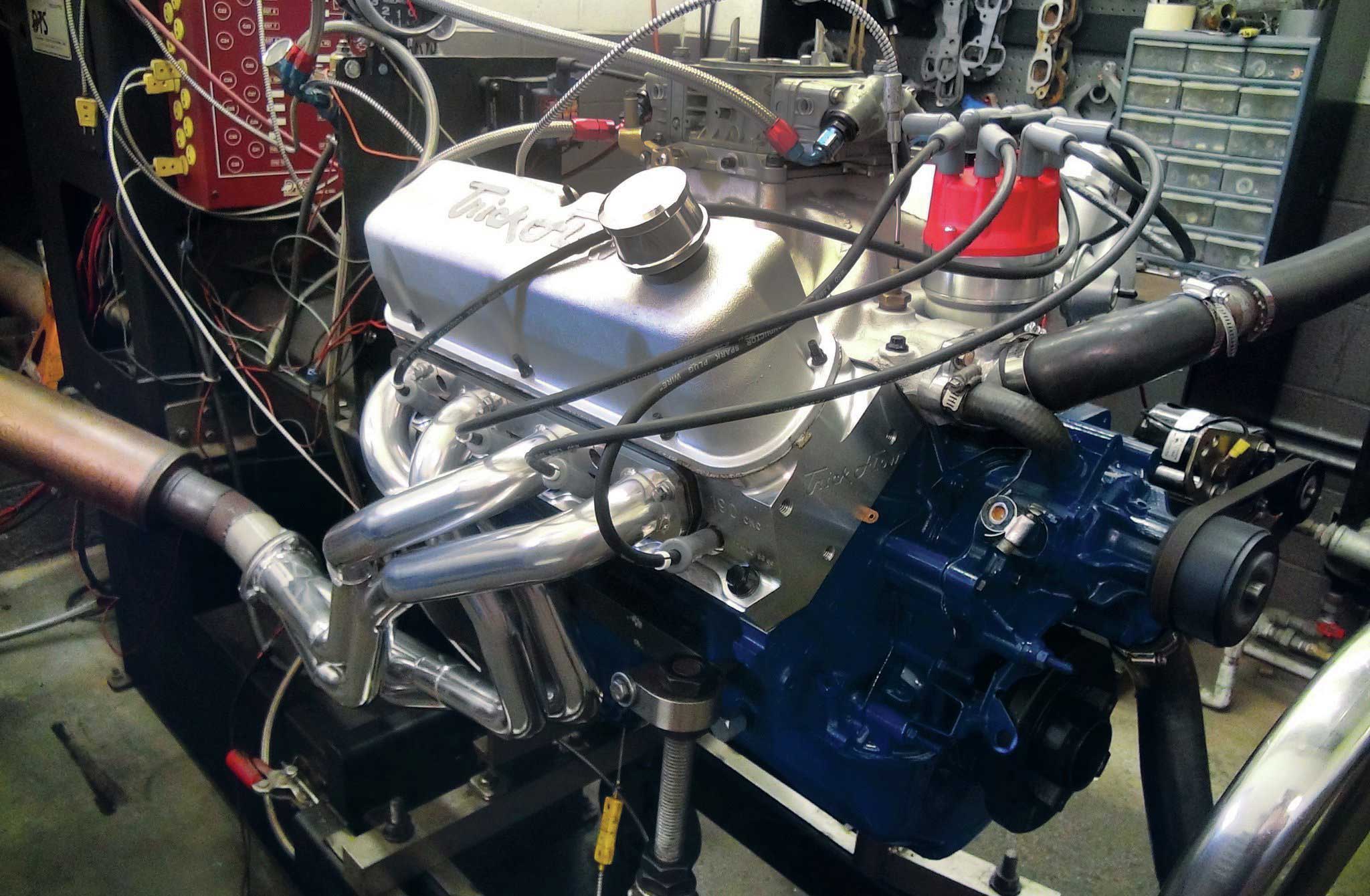
There is plenty of aftermarket support for Ford 351 engines, the tough part is figuring out which engine you’ve got. (Image/Hot Rod Network)
Engines are often identified by their displacement, like the ubiquitous Chevy 350, Mopar 440, or Ford Five-Oh.
But displacement alone isn’t always the best differentiator, and nowhere is that more evident than with the Ford 351 engines.
Sure, ‘351’ refers to the engine size, but there were essentially three major versions of the Ford 351—the Windsor, Cleveland, and Modified*.
*Officially, Ford never called these engines 400/351 Modified or 400M/351M. “Modified” was a slang designation originally applied by Ford enthusiasts, and the name just stuck. You’ll also hear folks define the “M” as “Michigan” after the engine’s original casting plant. The etymology doesn’t really matter, it’s just a way for us to distinguish it from the other 351 engines.
What version you have is very important to know, because major parts from each engine are not interchangeable.
To clear up any confusion, and to help you avoid buying the wrong parts, here’s a quick rundown on each motor so you can know for sure what you’ve got in your garage.
(Summit Racing‘s Tom Lynch contributed to this article.)
The Three 351s.
351 Windsor
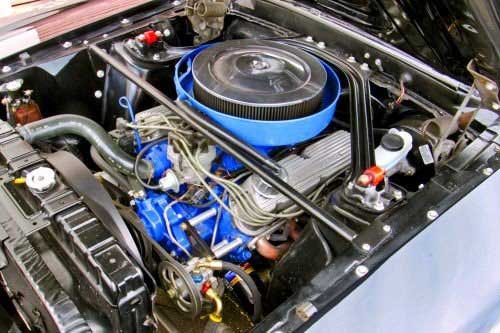
Ford 351 Windsor Engine (Image/Hemmings Motor News)
The 351W is named for the factory in Windsor, Ontario that produced them. It is part of the long-running Ford small block Windsor V8 family, which also includes the venerable Ford 302 (5.0L) V8. It shares the same small block V8 bellhousing pattern and motor mounts of the August 1964+ Windsor engines*. Key differences from the other Windsor engines include a taller deck height, unique firing order, and longer stroke.
*Pre-August 1964 engines (221/260/289) had a narrow 5-bolt bellhousing pattern, also referred to as the early V8 Windsor pattern. All post-August 1964 Windsor engines use a wider 6-bolt pattern (including all 351W), commonly referred to as the small block V8 pattern. The patterns are not interchangeable.
It’s far more common than the 351 Cleveland, and though it doesn’t have the “high performance” aura of its 351C counterpart, there is plenty of aftermarket support for it. Engine builders and hotrodders have no problems pulling gobs of horsepower out of these engines, and popular upgrades include cylinder heads, camshaft, headers, and intake manifold.
351 Cleveland
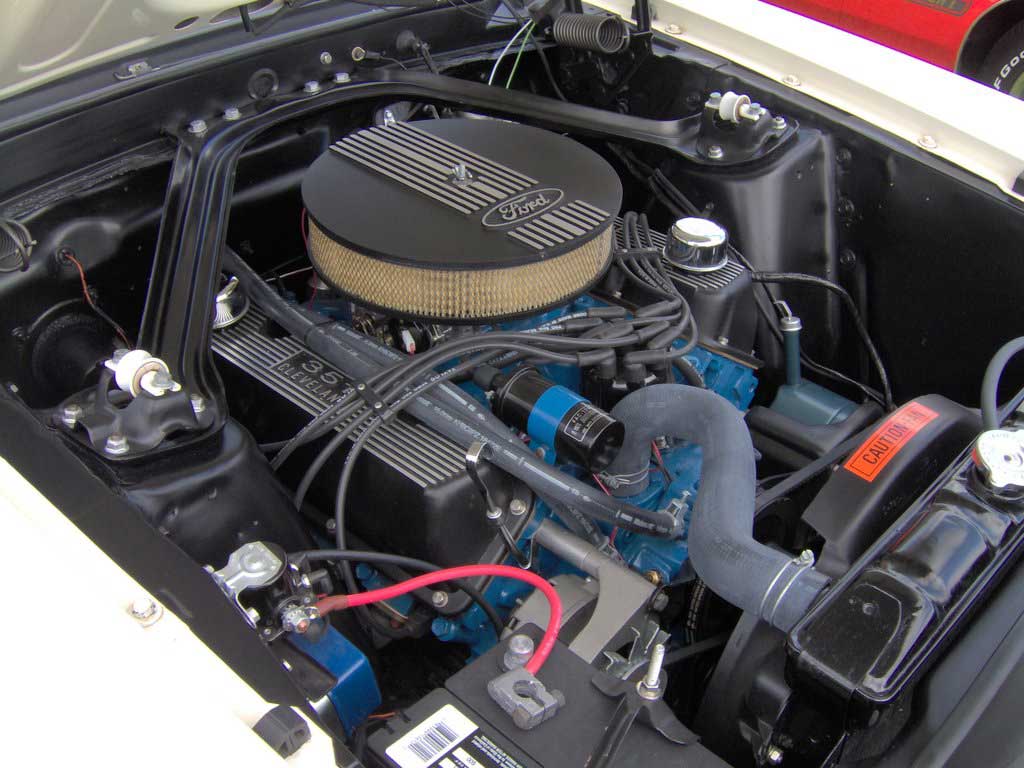
Ford 351 Cleveland Engine (Image/Wikipedia)
The 351C was built in Ford’s Cleveland, Ohio factory, and is part of the Ford 335 engine family. Back in the day, the 351C was considered the go-to Ford performance engine, thanks to its better-flowing cylinder heads and stronger crankshaft. Ford made both 2V and 4V cylinder head versions for the 351C, with the latter 4V heads being the more performance-oriented versions.
Unfortunately, Ford only produced the 351 Cleveland for five years (in the U.S. at least, Australia got the engine up until 1982). The engine’s rarity makes it a more expensive platform for an engine build, though it’s capable of making impressive power with the right upgrades. And, for what it’s worth, there’s still a ton of Blue Oval cache in saying you’ve got a real Cleveland under your hood.
351 Modified
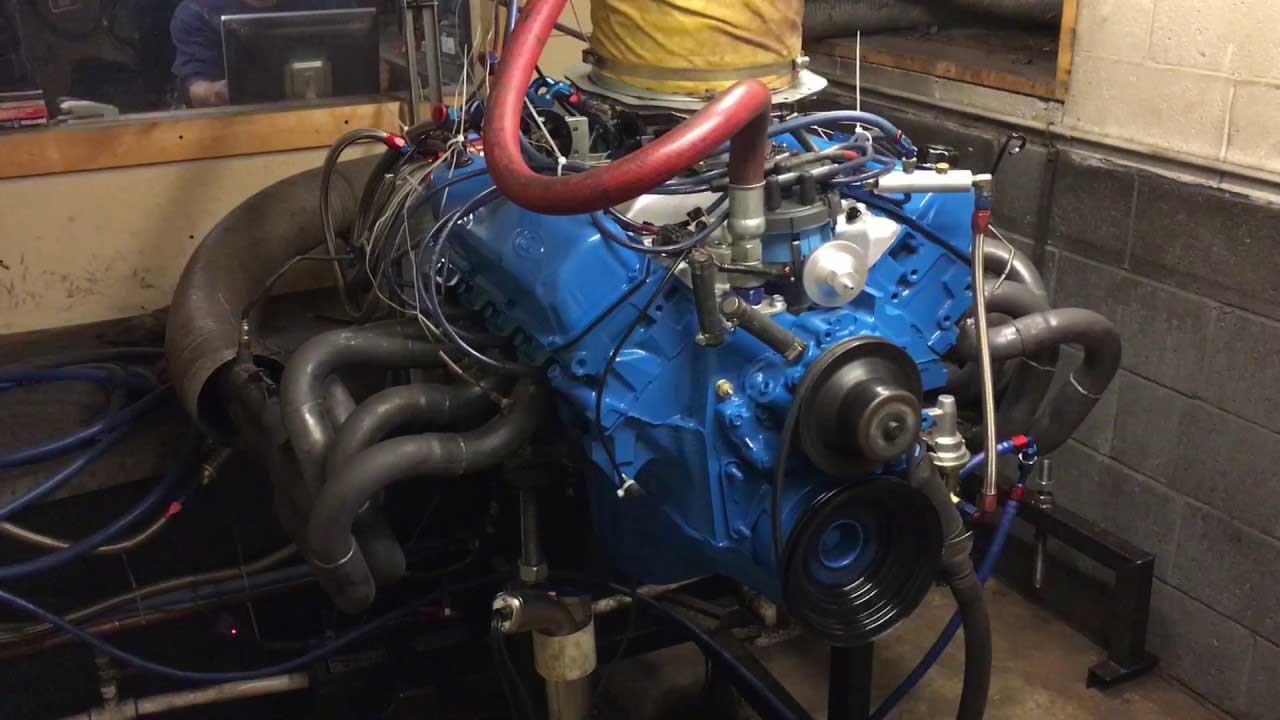
351 Modified Engine (Image/YouTube – John Sivec)
The 351M is part of the same Ford 335 V8 engine series as the 351 Cleveland. It’s based off of the 400 Modified engine (see note on nomenclature in opening paragraph), which was essentially a 351C with a longer stroke. Unlike the 351C however, the 400 block had the bellhousing bolt pattern of 385-series big blocks. It also had a higher deck height to accommodate the longer stroke.
As the 351 Cleveland faded away, Ford engineers reverted to the original 351C’s 3.5-inch stroke, yet retained the 400’s deck height to create the 351M. The bellhousing bolt pattern on the 351M uses the same pattern as the 385-series big block engines as well. (That means, even though they’re related, transmissions, intake manifolds, and other parts may not be interchangeable between a 351C and 351M.)
It’s also worth noting that the 351M was only available from the factory with a 2-barrel carburetor.
…
How can you tell the difference between the 351 engines by looking at them?
…
Three Easy Visual Differences Between the 351W and 351C/351M.
- Radiator Hose. On a Cleveland/Modified engine, the radiator hose (and thermostat housing) sticks vertically right out of the top of the engine block. Windsor engines have the radiator hose and thermostat installed into the intake manifold, where it exits from the front of the engine.
- Valve Covers. Windsor valve covers use 6-bolt covers, whereas the Cleveland/Modified uses 8-bolt covers.
- Timing Chain. Cleveland/Modified engines have the timing chain recessed into the front of the block itself, and its timing cover is essentially just a flat piece of metal. The Windsor’s timing chain attaches to the front of the engine and has an external timing cover typically made of cast aluminum.
Three Easy Visual Differences Between the 351C and 351M
- Cleveland engines share a bellhousing bolt pattern with the Windsor family. 351M engines use the bellhousing bolt pattern of the 385-series Ford big blocks.
- Due to a higher deck, the 351M’s intake manifold is wider than a 351C.
- Motor Mounts. 351 Cleveland mounts use two bolts to attach to the engine, whereas the Modified uses three.
…
If you’re not sure what bellhousing you have, check out this handy transmission I.D. chart.

Here’s a handy way to I.D. Ford Bellhousings. (Image/FORDification.com)
Why the Three Engines?
Though they share displacements, each motor was built and configured for different applications.
For instance, the 4V-351 Cleveland went in the top-tier performance cars, but the 2V–351C engines could be found in a smattering of medium-to-full size 1970-74 passenger sedans too. By comparison, the 351M was used in 1975-82 passenger cars, light trucks, and SUVs.
(Ford engineers however, seemed to have stuffed a 351 Windsor in darn-near everything short of their coffee makers.)
And that’s what causes the confusion. Swaps between the three engines are common, so you can’t always match the engine to the vehicle you found it in. And, given the lack of interchangeability between key components, it’s absolutely critical to know what you’re wrenching on.
To put it into perspective, Ford offered the 351 Cleveland from 1970-74 (in the U.S.) and the 351 Modified from 1975-82. The 351 Windsor was available from 1969-97, making it by far the most common engine of the trio.
As a final historical footnote, the introduction of the overhead-cam Ford Modular V8 in 1991 meant that the Windsor, Cleveland, and Modified engines represent the final pushrod V8s designed by Ford.

The ‘M’ actually does stand for ‘Modified’. Reference the Ford Master Parts Catalog. Also a point of clarification, the M/400 also had a small bell pattern as well. I can provide pics of both as necessary.
Also worth noting…the W has 6 valve cover bolts, not 5.
You’re right Ben–we made the change in the story–good catch!
351M/400 and 429, 460 all use the same bell housing.
Dana, you are absolutely correct. We all have put or know someone who has put a 429 or 460 in their f150 in front of their 351m/400 transmission.
There are two more ways to visually identify a 351C engine in addition to those listed. The mechanical fuel pump located on the drivers side (U.S.) of the block near the front, is mounted with two vertically opposed fasteners. One on top and one on bottom. The 351W fuel pump is attached on each side horizontally, or left and right sides.
I agree how confusing it can get, especially with so much misinformation online. It’s definate that all Cleveland production in the States of both 2-V and 4-V engines, ended in 1974. But I need to question a statement in this article that reads, “The 2V-351C engines could be found in a smattering of medium-to-full size 1975-79 Ford passenger sedans, and in 1977-88 light trucks too”. It could be a simple typo error or perhaps what I thought I learned over the past 40 years is totally wrong.
Another point of identification that new fans of the 351C might not know is how to easily check for 2-V and 4-V (barrel) heads. In the upper most corners near the valve cover rails on U.S.production heads, look for the 2 or 4 indicator that’s cast into the head. There might also be a small dome shaped dot beside the number. It’s typically found on heads that were cast very late in the 1970 casting run and in the following years according to the casting date statistics. The dot indicates a minor change in production but it DOES NOT mean open or increased volume combustion chambers. My D1AE-GA closed or “quench” chamber 4-V heads, and countless more like mine have the 4* indicator. The 351M-400 heads don’t have number designations because they all have the smaller 2-V sized ports and valves with open combustion chambers. They do share the same basic Cleveland heads architecture and with a little work they will support substantially more horsepower over a wider rpm range than production Windsor heads.
Boat anchors ??? The small block, double hump Bowtie variety from the General are perfect for that application. And the beat goes on…..
Good insight–and yep, we confused ourselves on the 351M/C/W’s available years in the last section. It’s been updated–thanks for the heads up!
I got my first Ford in 1967, a 1957 del Rio station wagon , and have owned literly THOUSANDS more Fords since then. I have never seen or heard of a Cleveland in a pickup nor a 400 with a “FE” bolt pattern. I keep an open mind and learn something new every day but 3 other guys that bleed Ford blue when we bust a knuckle, agree. Besides those two items , your article I hope will educate all the “cool guys ” who always boastfull proclaim ” Its got a Cleveland” but can never tell me the differance between it and a windsor or modified. Thank you , good job setting the world straight,including the “down under boys”
Rick, I agree. I think more than one person wrote the original article and when someone said a Ford big block,(429/460), someone else was thinking FE engines. But traditionally we all know the difference between a 429/460 big block and the FE engines. Even though the FE engines are physically a BIG BLOCK.
You’re exactly right gentlemen. We’re sometimes guilty of using the slang “big block” moniker too often when talking about Ford engines, and it’s especially confusing here in regard to the 385- and FE-series. We’ve adjusted the paragraph above to be more clear–thanks for the heads up!
Rick…to add to your observation about those really cool guys that boastfully claim to own a killer Cleveland but can’t name a single difference between a Windsor and a Cleveland. Let’s include the next level of cool dudes that “ Own a BIG BLOCK Cleveland engine” in their totally radical rides.
I used to try to explain the how and why reasons Ford’s Cleveland Small Block shares some of the same internal dimensions as the Windsor but it seems useless.
The ignorance is bliss beat goes on…..
The water Thermostat usually tells you if it is a Windsor or a Cleveland ( location)
The Cleveland, 400 & 351M were all part of the Ford 335 design engine family. The Cleveland (both 2V & 4V) was introduced first in 1970, followed by the (taller deck) 400 in ’71. Note that FoMoCo NEVER applied the “M” label to the 400 & it was in production a FULL 4 yrs BRFORE the 351M came out in 1975 AFTER the original Cleveland was discontinued in North America. The 351M remained a passenger car engine ONLY until 1977 when it appeared in trucks. Both it & the 400 disappeared forever after 1982. A VERY GOOD read is the “New Muscle Power” booklet published by Ford announcing the 351 Cleveland for 1970; mostly about the 4V M-code. There’s that “M” again to confuse the less intelligent……….
After reading all the comments, I do know one thing. My 34 Ford Coupe, has a 351 Windsor. Thanks to all.
Thanks guys this is a good read I learned a lot I have a 77 F-150 with a 351M and my land lord told me we could put a 351C or 351W in instead I think I will just rebuild the one I have
I have a 1978 Country Squire with a 351M/400M. Transmission is gone and I’m told I can just pop one out of an old F150 to replace it. Can anyone authoritatively confirm this?
Hey all,
What if the letter “M” is cast into the corner right-side of engine near head??
Then you’re probably hanging upside-down, actually it’s a “W” for Windsor…(LOL)
Awesome information. Having owned both the 351 Windsor and Cleveland versions in Australia, I didn’t realize there was an “M” version.
Cheers Mark C