


LQ9 Engine Specs: Performance, Bore & Stroke, Cylinder Heads, Cam Specs & More

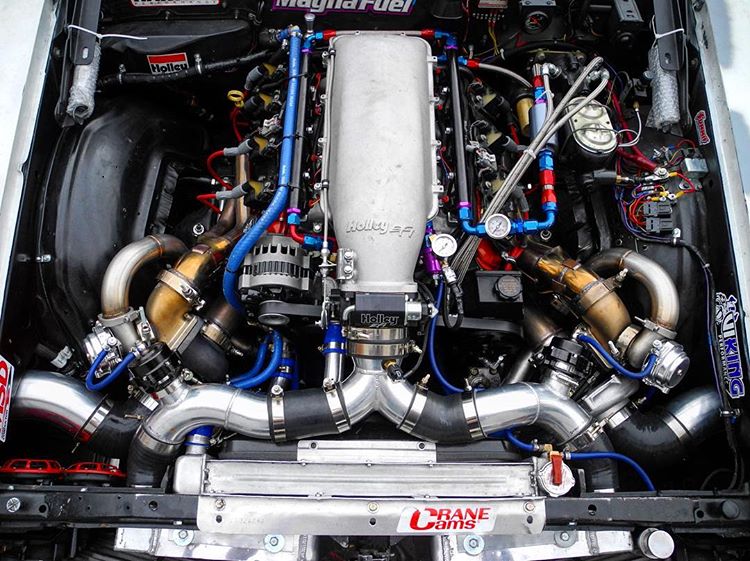
This LQ9 was swapped into a 1966 Buick Gran Sport and outfitted with twin turbos. (Image/thepicta.com)
Mechanically similar, General Motors’ LS and LS-based Vortec engines wound up on almost every branch of the GM family tree: Chevy, Pontiac, GMC, Cadillac, Buick—heck, even Saab, Hummer, and Isuzu got some LS love.
Since LS and Vortec engines are so common, they’ve become the go-to performance and swap engines of the modern era.
These motors are capable of making a lot of horsepower, and respond well to upgrades like turbos, superchargers, high-flow cylinder heads, intake systems, cams, and nitrous oxide.
The aftermarket is strong, crate engines are available, and used motors are often cheaply sourced through junkyards.
Summit Racing has created a series of comprehensive guides for each engine in the LS family, so engine builders and tuners can have a handy reference for their projects.
This guide is specifically for the GM LQ9 engine.
[Looking to upgrade your LQ9 engine? Check out LQ4/LQ9 Engine Upgrade Guide: Expert Advice for LQ4 & LQ9 Mods to Maximize Performance.]
You can explore all of our LS engine spec guides and LS tech resources here.
(Summit Racing’s Brian Nutter and Paul Spurlock contributed to this article.)
Chevy LQ9 Engine Specs
The LQ9 is a Gen. 3 small block engine used in GM trucks between 2002 and 2007. For marketing purposes, it was also known as the Vortec HO 6000 or VortecMAX. The information listed here is for the stock engine.
[table “146” not found /][table “147” not found /]
[table “148” not found /]
[table “149” not found /]
[table “150” not found /]
[table “151” not found /]
[table “152” not found /]
[table “153” not found /]

I’m putting a 2005 lq9 together, and the wrist pins are discolored. It looks like they got extremely hot? Any input? The bearings, all looked good. And blocked chk”d out good.
The LQ9s had full floating rods so there should have been less friction than the press-fit.
The factories do run pin-to-piston clearance tight, in an effort to reduce noise. They will often have a .0002 in. press fit that opens up under running conditions when the aluminum pin bore expands more than the steel pin.
Check the pin bores and see if there is any sign of metal transfer–this will appear as a tear in an otherwise smooth surface. You can also check the small end rod bushing.
Check for excessive wear–you should be able to slide the pin in when it’s completely square and you should feel *almost* no vertical movement at the ends of the pin when you push them up and down.
The pins being discolored isn’t good and it would be good to replace them.
The diameter on the full floating rod Gen. 4 models is about .9431 inch, which is smaller than the old .9449 in. press fit pins.
were all lq9 engines full floating pistons
Bill
Hi Bill, we have found no evidence that LQ9s ever came with anything other than full floating piston pins. Of note, the LS6 came along in 2001 (one year earlier) and had the same.